the-shepherds-beat-sheet
The Shepherds Beat Sheet
Thesis
What kind of ancestor are you while you’re alive? How do you treat what was left to you, land, stories, bodies and waste, amid fractured lineages and a world under ecological strain. The Shepherds takes mixed inheritances (including harm and debris) and asks how to turn them into accountable rites, living kinship and humane symbols, so we can finish the stories we need to tell and leave something better than we found.
Synopsis
Carly and Alisdair enter a backlit, near-empty world to invent kinship in real time, asking how to live as good ancestors amid fractured lineages and ecological strain.
Act 1 begins in hiding: two sheep peer from behind a bush, trying to recognise what has entered their horizon—newcomers, threats, kin. Two sheep and two shepherds migrate across a barren stage with meticulous pauses, reverses, and shared timing, as if tradition is something you can only make by repeatedly agreeing where “forward” is. Shepherding tasks—checking, mending, lifting, guiding—loop into choreography: care as a practised grammar. At the top of the act’s final scene, two life-like butchered carcasses—headless, hanging—are lowered into view, and a chant ushers in a ritual that sanctifies and scrutinises the sheep–human bond.
Act 2 turns the pastoral inside out. Alisdair’s character (cult leader) delivers a sermon that weaponises belonging: tenderness becomes leverage, certainty becomes a trap, and the flock is shaped through language that pretends to be love. Carly’s character (chosen woman) then speaks at speed, confronting the legacy of coercion through a story of facing the cult leader she once fell under—intergenerational trauma rendered as a living argument with memory, consent, and selfhood.
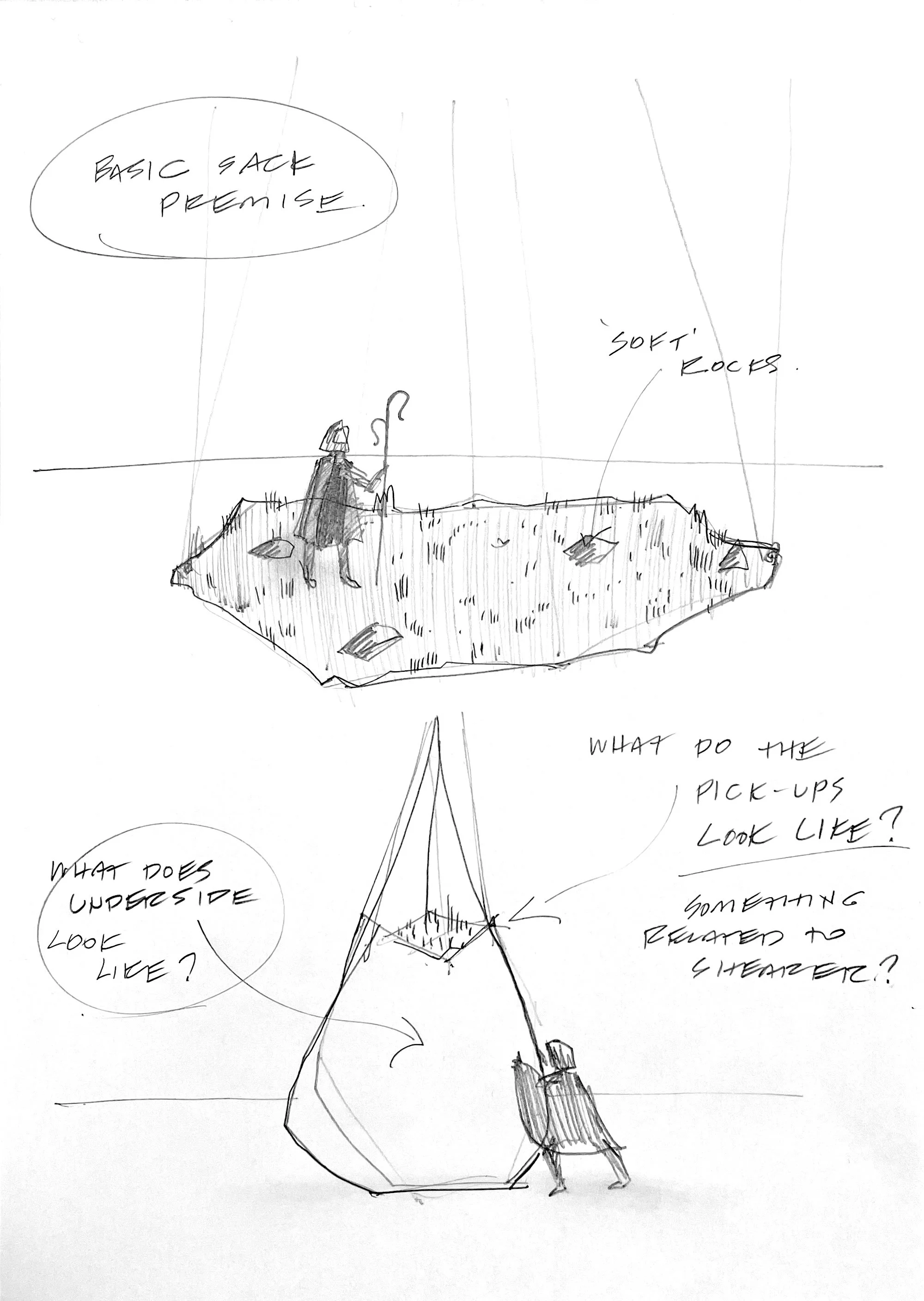
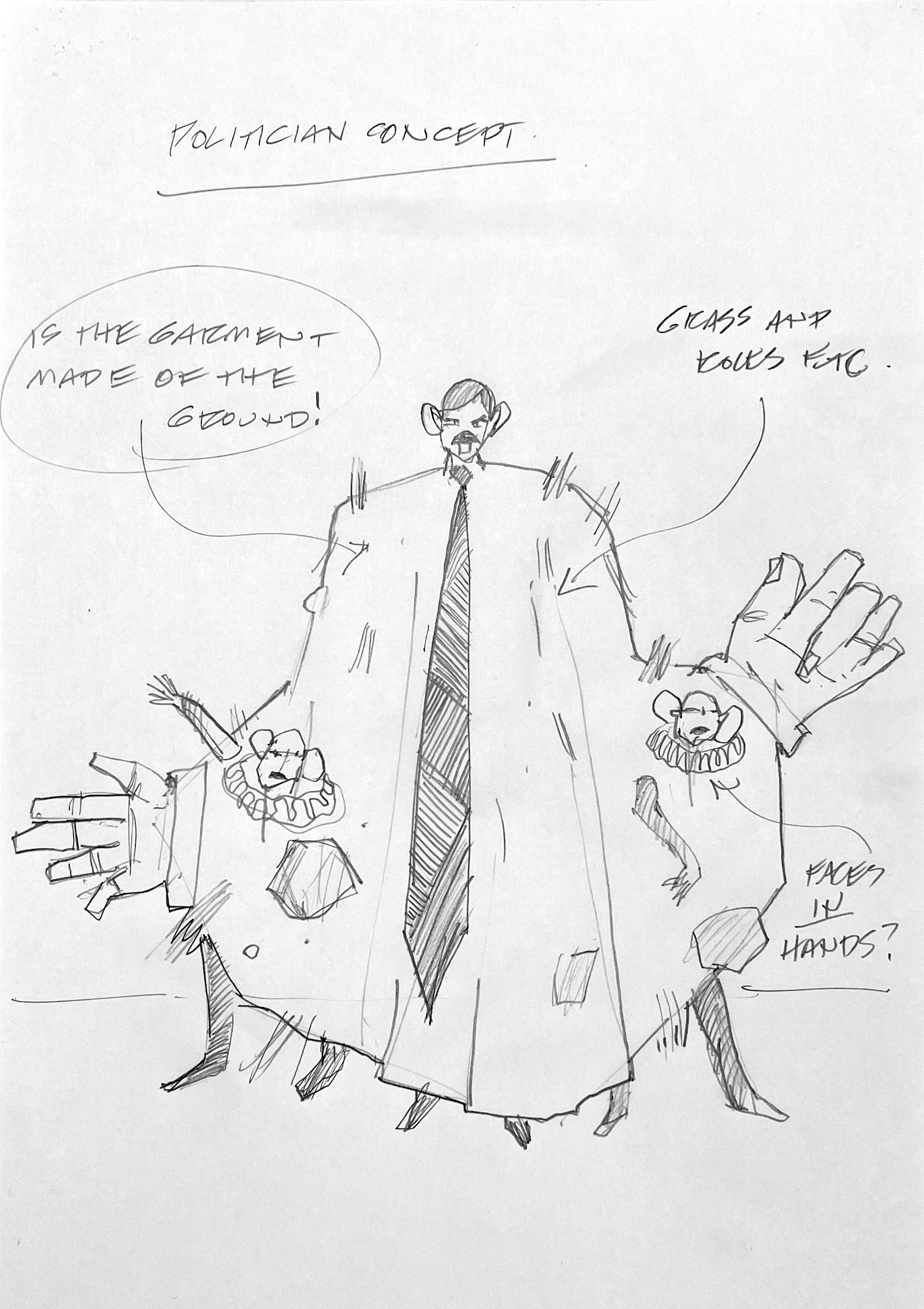
Act 3 shifts into fable and making. A fairytale retells the shepherd–sheep relationship through the cult leader’s eyes as Carly’s character (chosen woman) drags a slab of “land” onstage with Karlia riding it; two sheepdog-masked stilt walkers sound crook-shaped flutes, as if the world itself is being played into being. A harness dance follows—sheep caught, held, arranged—before the body becomes a site of flesh and meat, tenderness tipping toward processing. A unison duologue then reconciles with the roles both performers played inside a toxic relationship, threaded with solos and duets that fracture and rejoin what cannot be cleanly explained. Finally the land is transformed: debris and discarded costuming are laid upon it, and it cinches into a sack as it is hoisted skyward by a drawstring mechanism—an offering made from what has been carried. The work closes with a dedication to the next generation: a sheep-heaven monologue delivered from inside a beautiful group dance that feels like a new tradition being invented in real time.
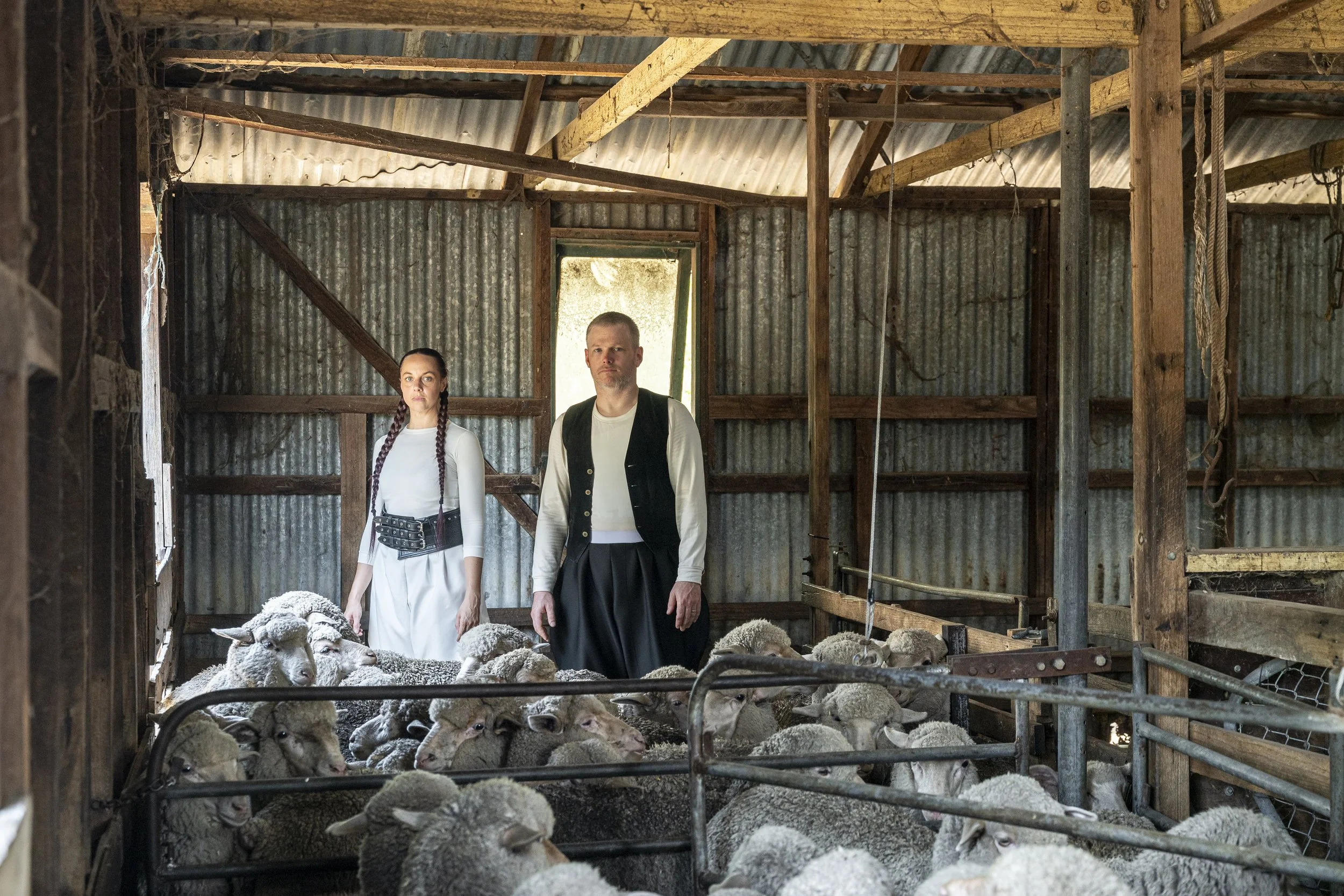
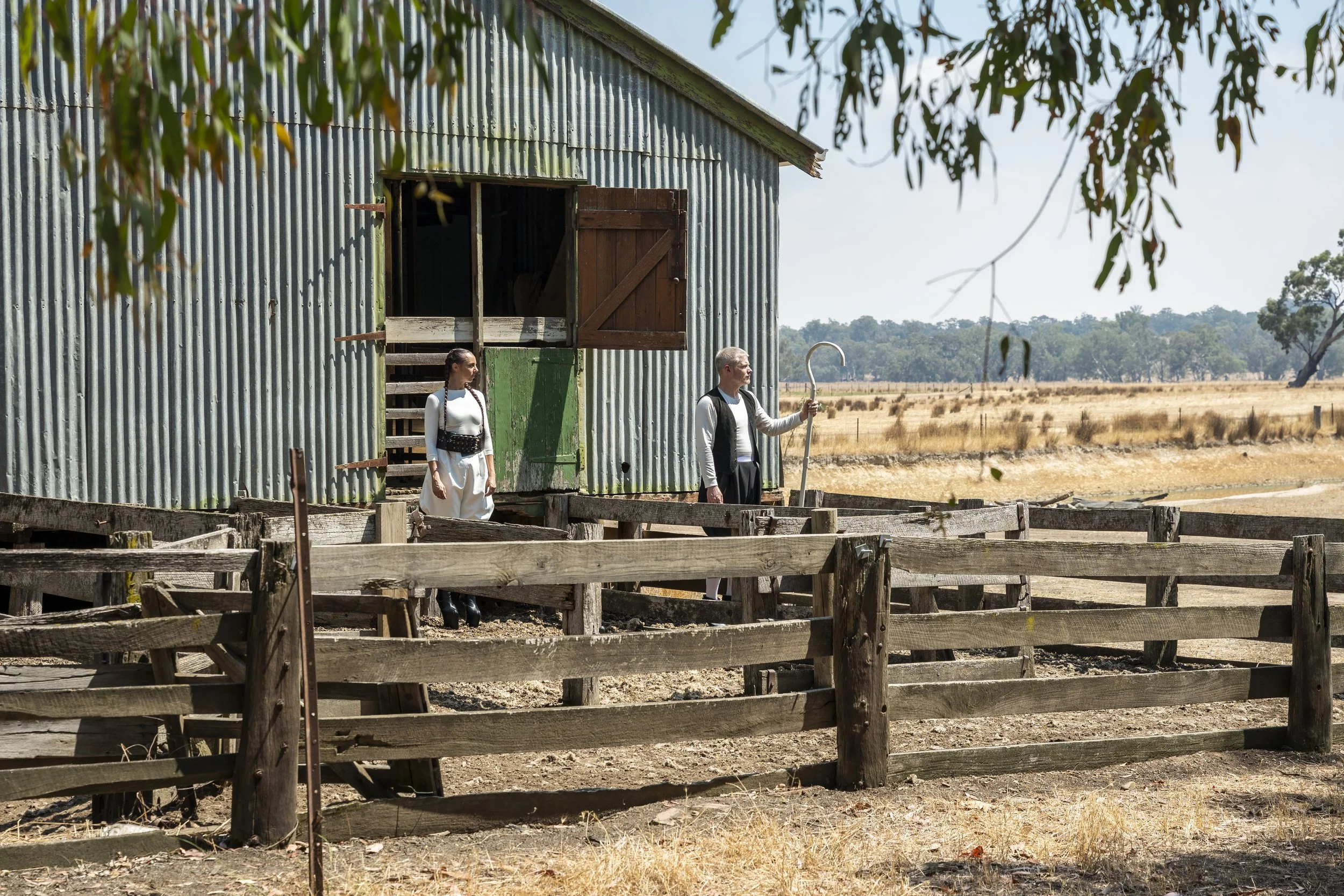
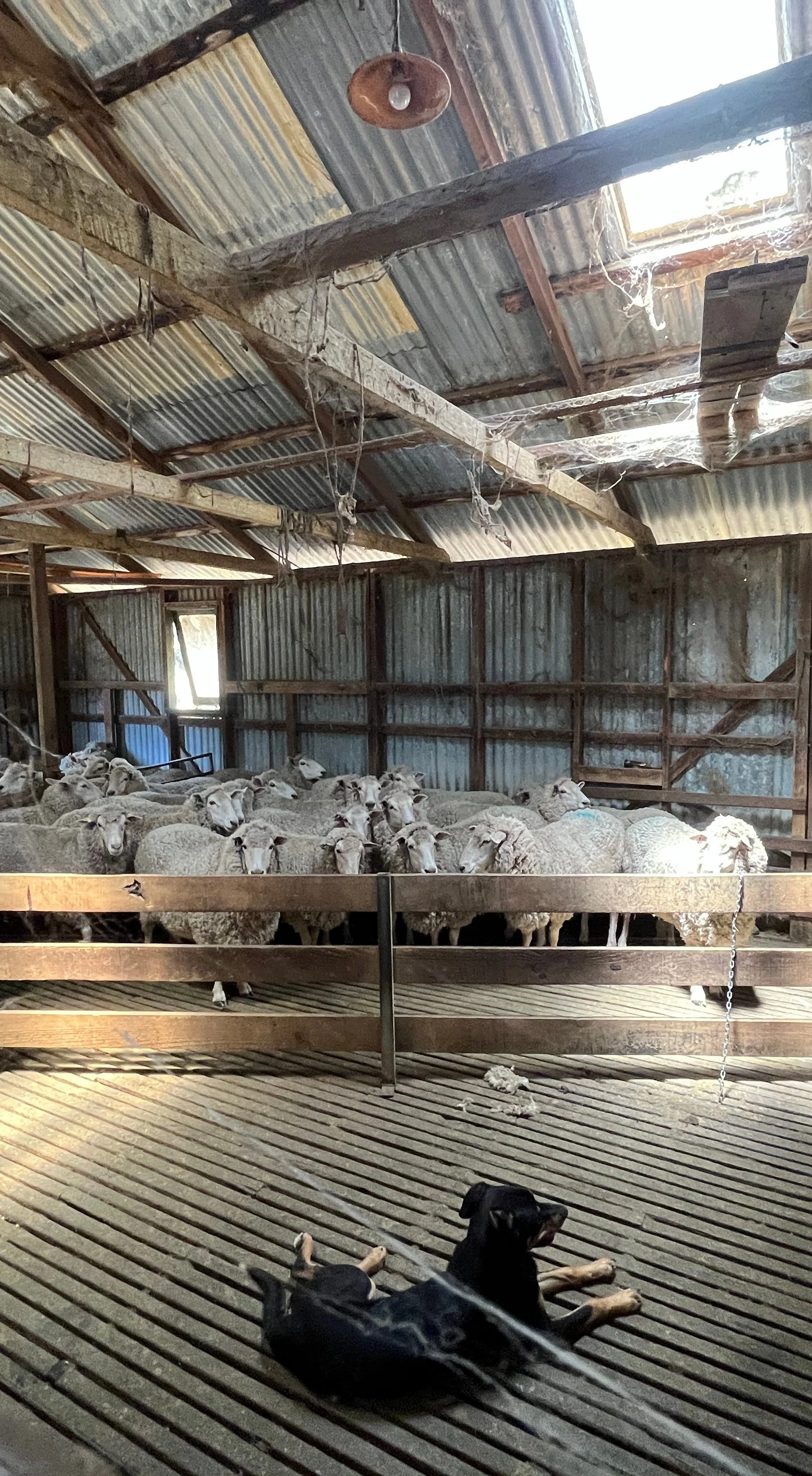
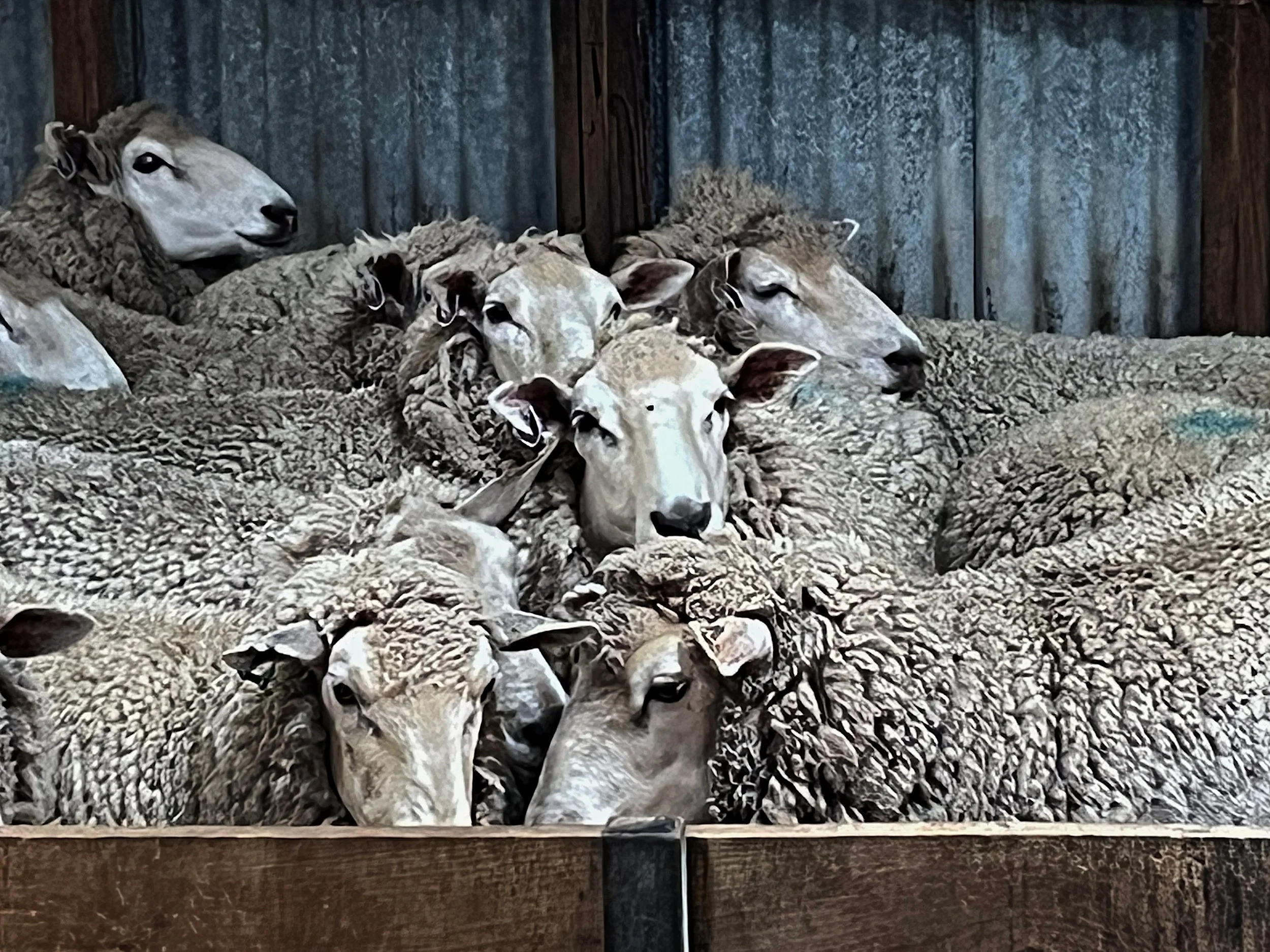
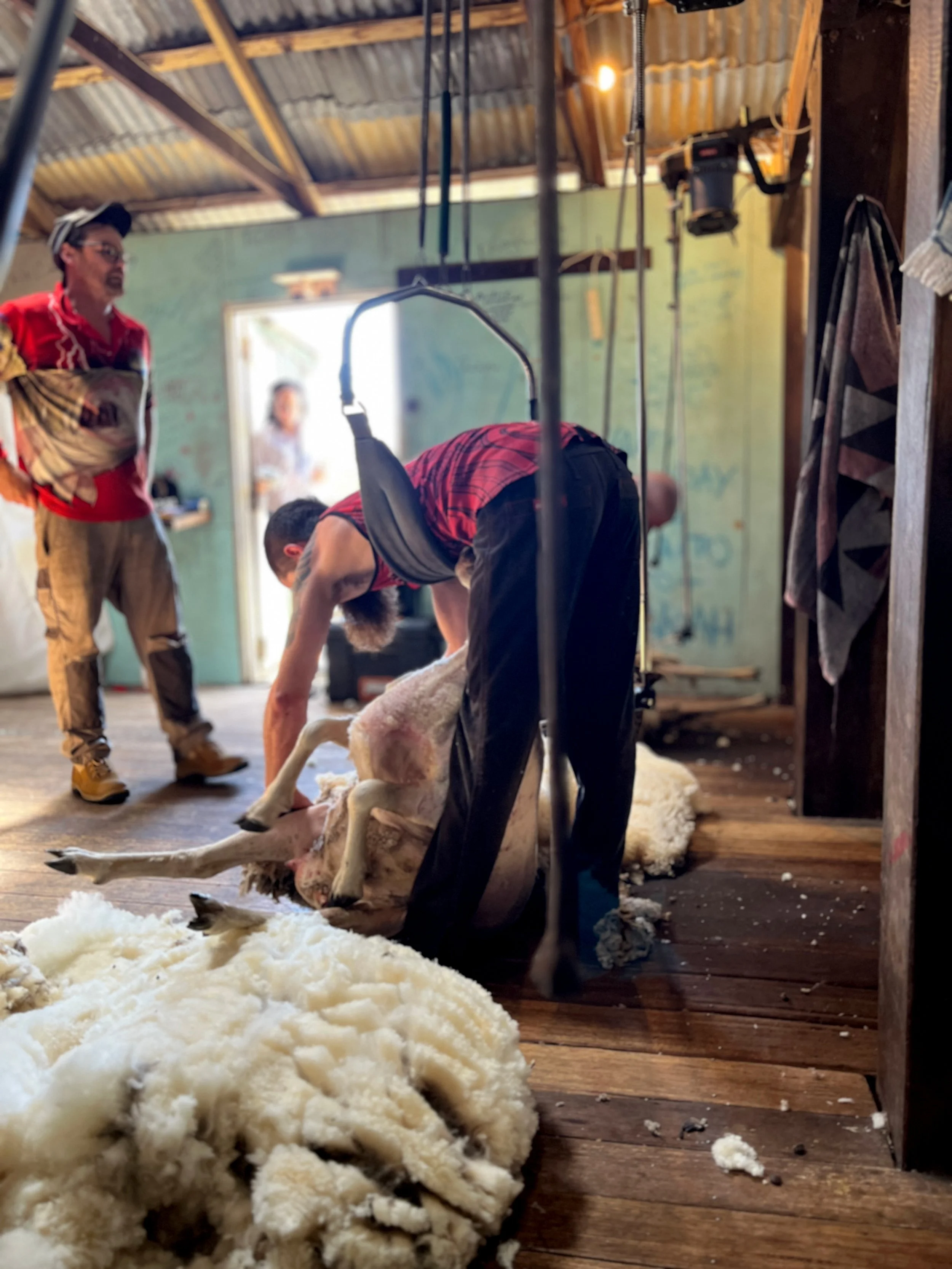
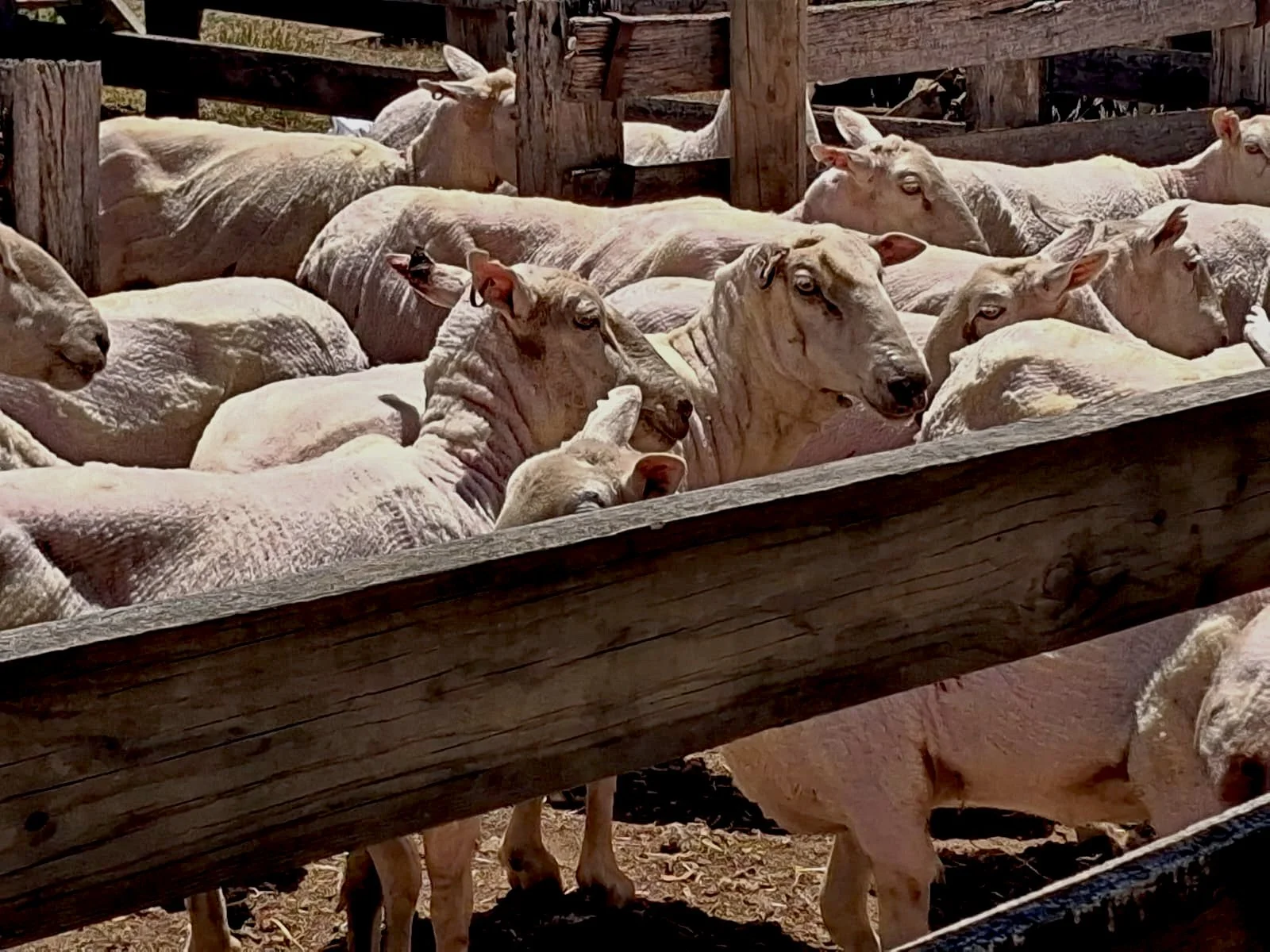
IMAGES FROM OUR TRIP TO SHEARING IN SEYMOUR
Beat Sheet scene guide
Act 1 — World Building
Scene 1: The Sheep Behind the Bush (Duologue / First Contact)
What happens: Two sheep hide and peer into the unknown, trying to identify and understand two newcomers. Naming becomes a tactic: comic, wary, and sharpened by fear of misrecognition. Why it’s here: Establishes the animal lens and the ethics of recognition—how we name what we don’t yet understand, and how that naming becomes inheritance.
Scene 2: Migration Across a Barren Stage (Slow Choreographic Passage)
What happens: Two sheep and two shepherds traverse the stage in a slow, precisely timed sequence of pauses, reverses, and re-orientations. Why it’s here: Shows kinship as coordination and discipline—tradition built through repeated agreement. Hints that guidance can slide into control.
Scene 3: Shepherding Montage (The Grammar of Care)
What happens: Shepherding actions—checking, tending, lifting, mending, guiding—repeat until they become choreography. Gestures accumulate into a system. Why it’s here: Makes labour the foundation of belonging, and sets up the later question: when does care become doctrine?
Scene 4: Ritual of the Flock (Chant / Carcasses Lowered)
What happens: At the top of the scene, two life-like butchered carcasses—headless, hanging—are lowered into the stage picture. Beneath/amongst them, a chant-driven ritual formalises the sheep–human relationship as sacred, contractual, and uneasy. Why it’s here: The carcasses make the pastoral cost undeniable: devotion sits beside consumption. The chant ritualises the bond while exposing its violence.
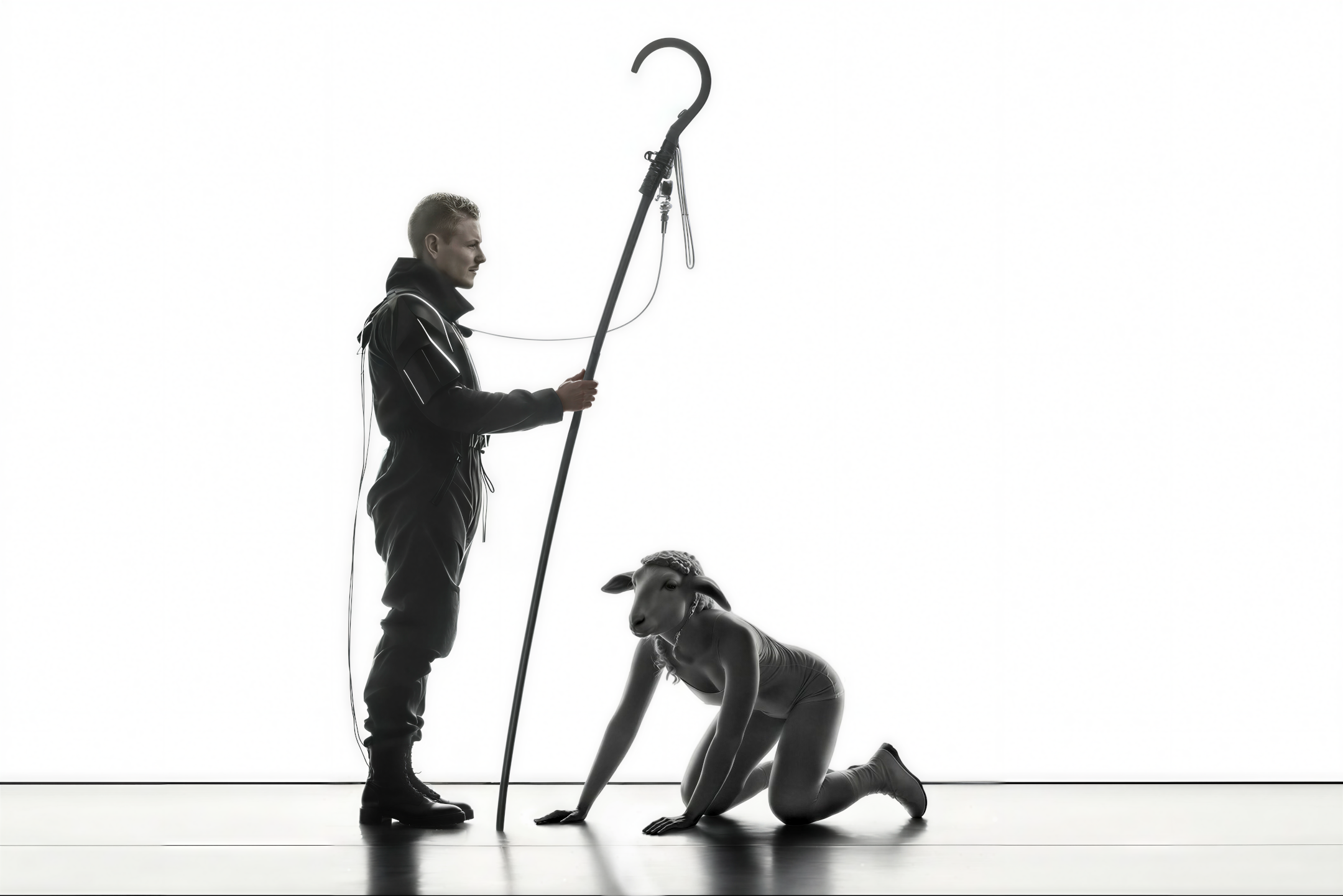
Silhouette concept image

Silhouette reference image for lighting design from Alisdair’s “OK, Bye!”
Act 2 — The Trials
Scene 1: Sermon (Belonging as Control)
What happens: Alisdair’s character (cult leader) delivers a sermon using cult language to gather, shape, and manage the flock—care dressed as certainty. Why it’s here: Brings power inside the community rather than above it. Examines intimacy as a mechanism of manipulation.
Scene 2: Confrontation Monologue (Trauma / Intergenerational Inheritance)
What happens: Carly’s character (chosen woman) delivers a fast-paced monologue about confronting traumatic pasts, depicting a story of facing the cult leader she once fell victim to. Why it’s here: Direct testimony interrupts the mythic frame—memory becomes contested terrain; narrative becomes a tool for survival.
Act 3 — Making, Catching, Reconciling, Dedicating
Scene 1: Fairytale + The Land Arrives (Cult Logic as Fable)
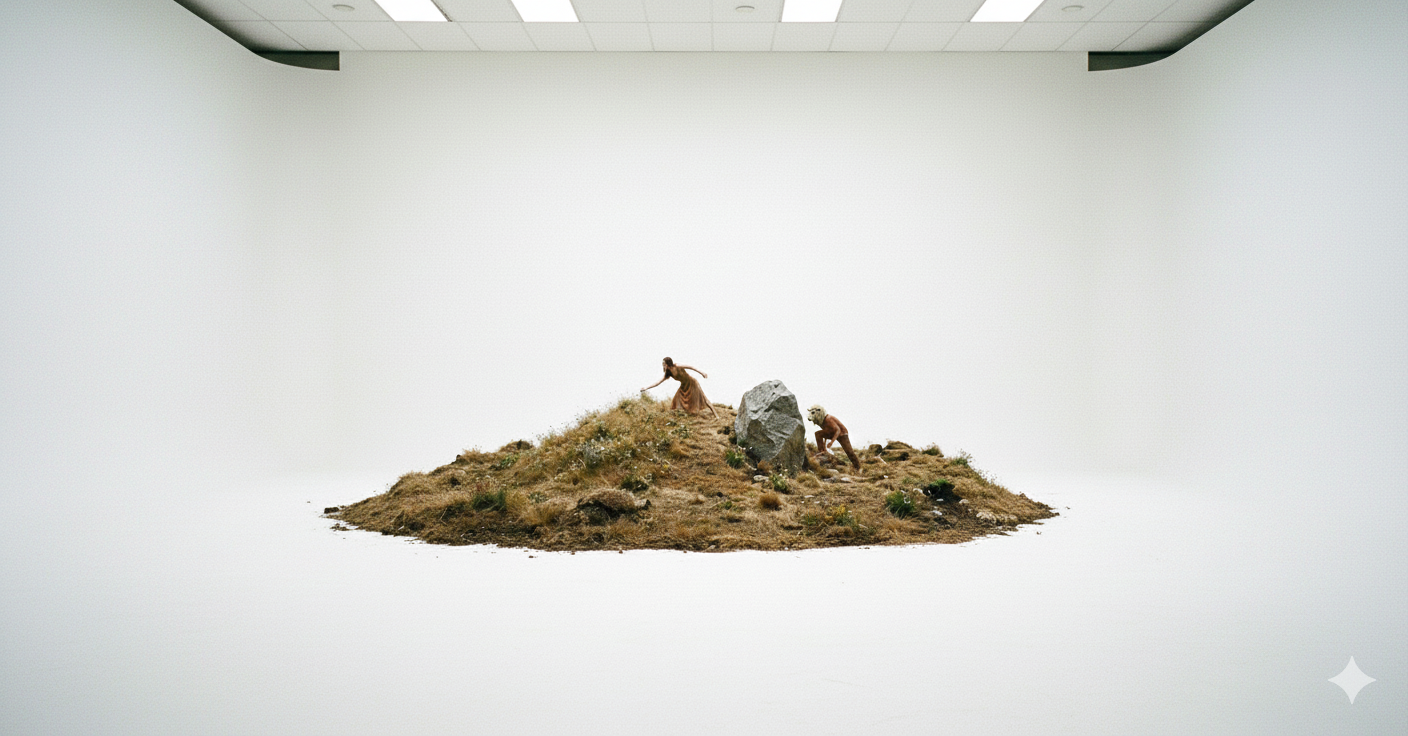
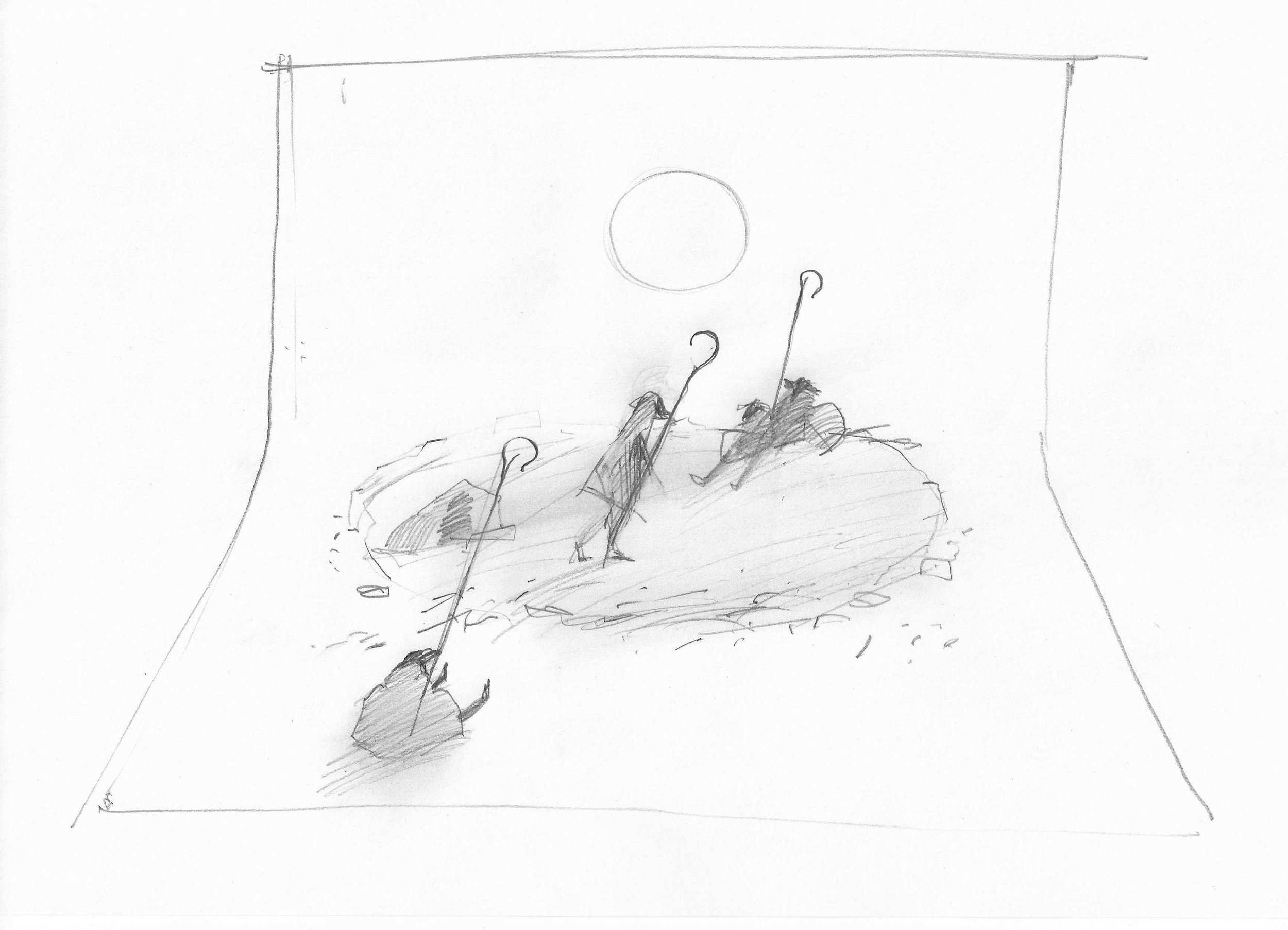
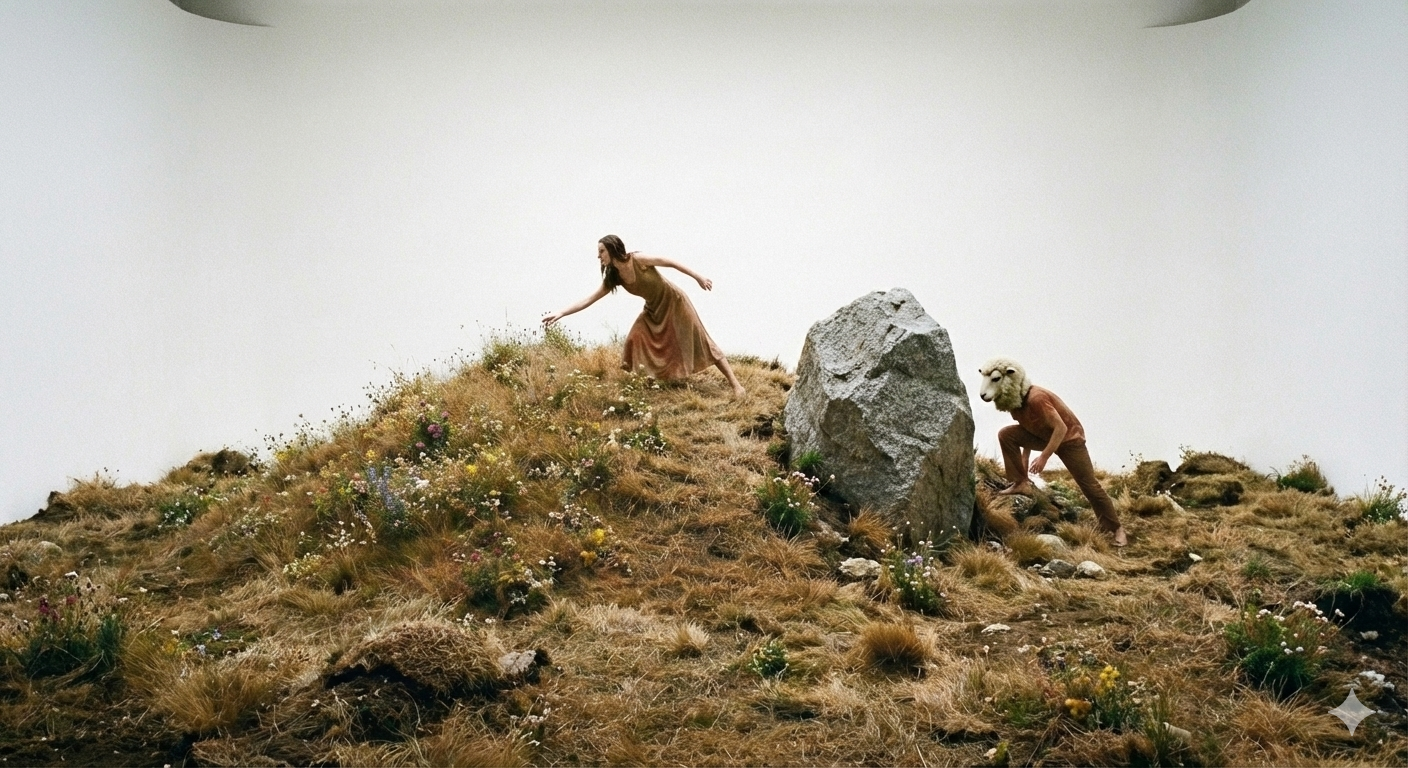
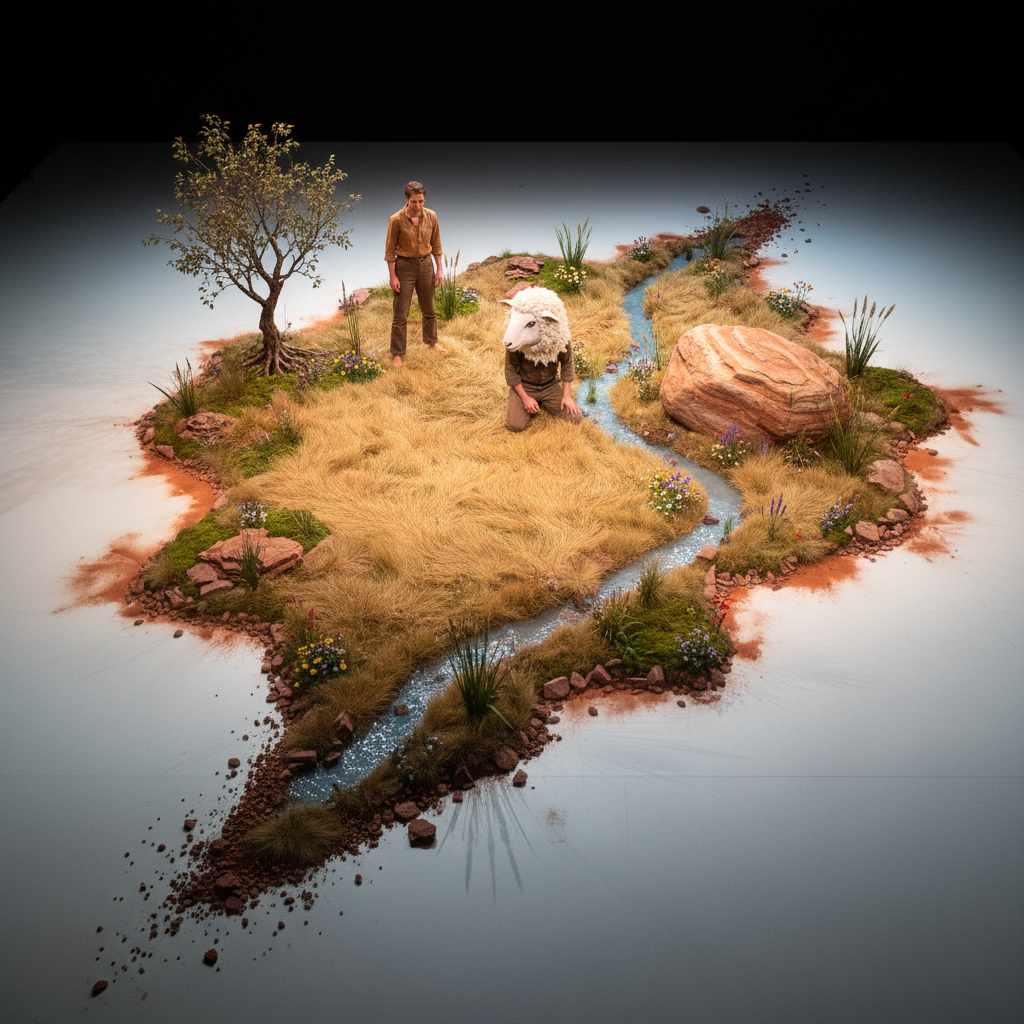
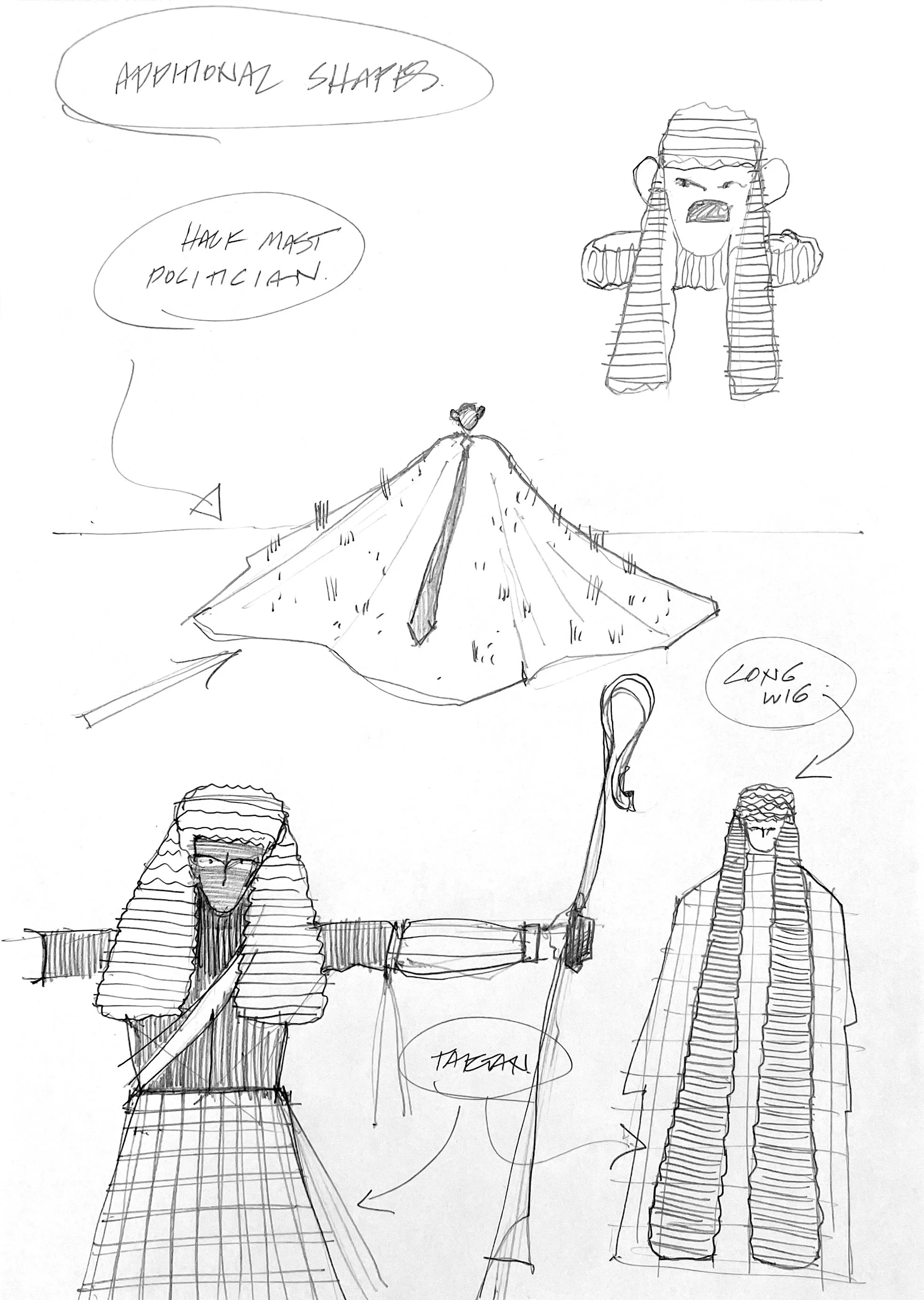
What happens: A fairytale frames the sheep/shepherd relationship through the worldview of Alisdair’s character (cult leader). Carly’s character (chosen woman) drags on the “land” object with Karlia on it, while two sheepdog-masked stilt walkers play large crook-shaped flutes. Why it’s here: The world expands physically. The fairytale shows how domination often arrives as a story that explains everything.
Scene 2: Harness + Meat (Capture / Body as Material)
What happens: A harness dance in which two sheep are caught/contained by the stilt-walking dog-men, followed by choreography exploring the body as flesh and meat—tenderness tipping toward processing. Why it’s here: Materialises the stakes: bodies handled, contained, and made useful.
Scene 3: The Reckoning (Unison Duologue + Solos/Duets)
What happens: Carly’s character (chosen woman) and Alisdair’s character (cult leader) speak a unison duologue reconciling with the roles they played in a toxic relationship, threaded through dance solos and duets. Why it’s here: Refuses a clean narrative. Holds contradiction—harm, complicity, love, need—while searching for accountability without a new doctrine.
Scene 4: Dedication / Sheep Heaven (New Tradition + Hoisted Sack)
What happens: The “land” transforms: debris and discarded costuming are laid onto it, then it cinches into a sack and is hoisted into the sky via a drawstring mechanism—an offering made from what’s been carried. A dedication to the next generation culminates in a sheep-heaven monologue delivered within a beautiful group dance that feels ageless: a newly invented “traditional” dance. Why it’s here: Ends with offering rather than closure—inheritance made visible, and a future practice proposed through dance.
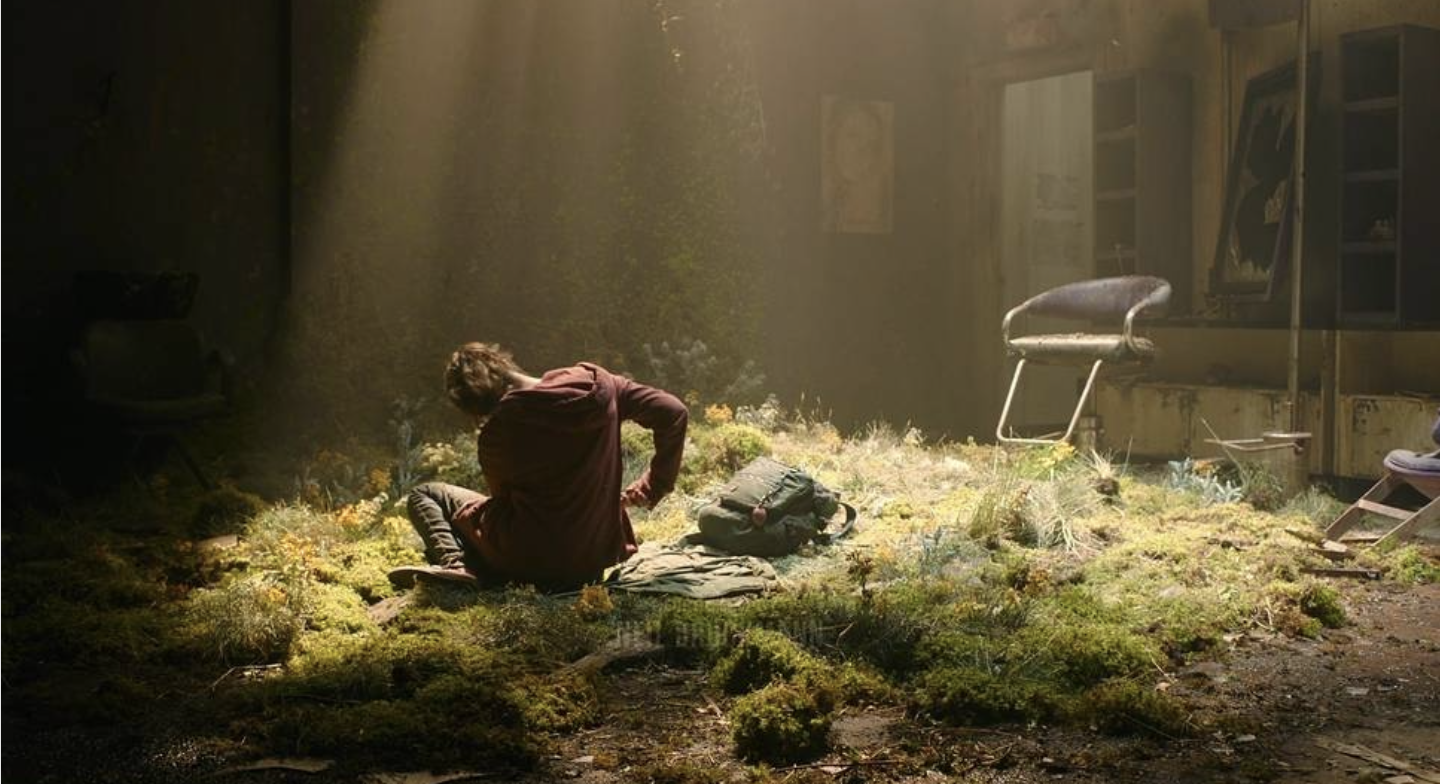
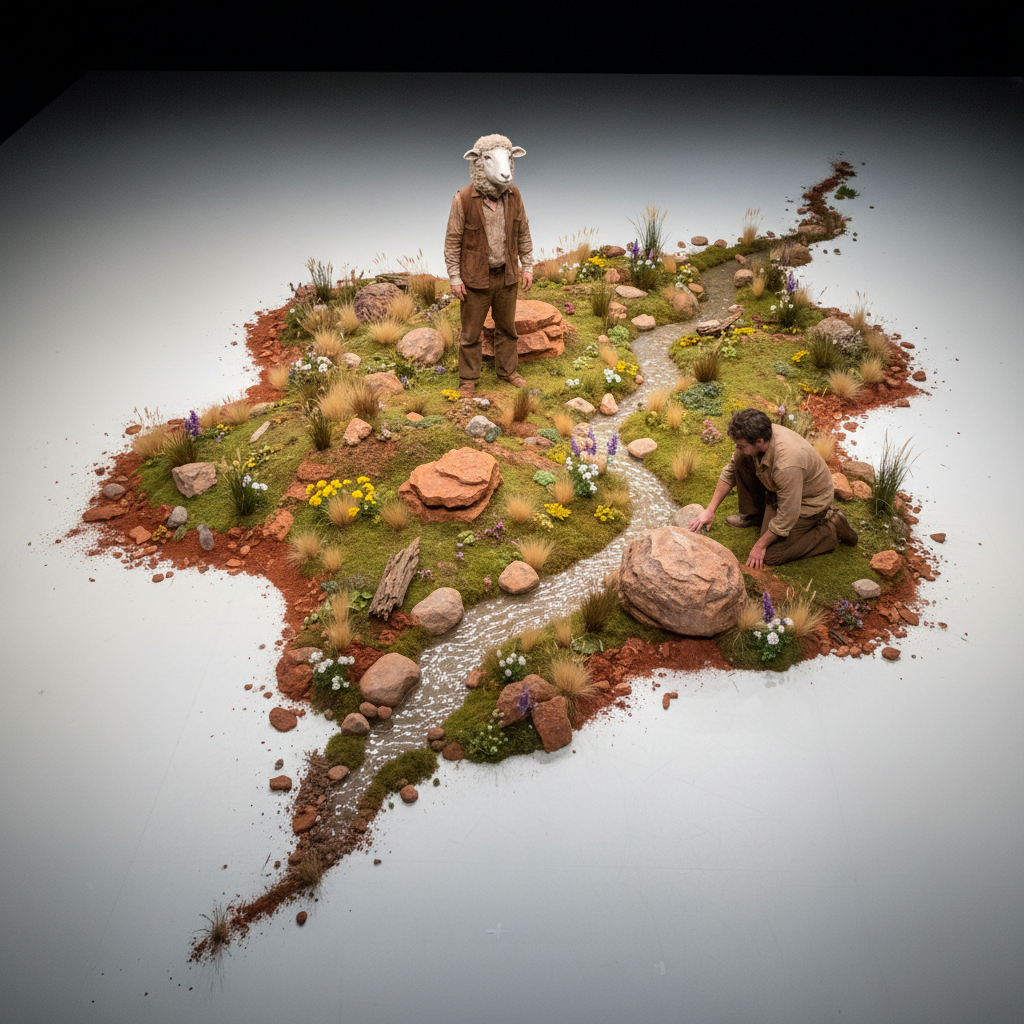
REFERENCE IMAGE FROM TV SHOW “The Last of us” - Concept Reference - Draggable grassy knoll scene to be littered with objects above and below the surface during different part of the show. (previously referred to as the draggable sack)
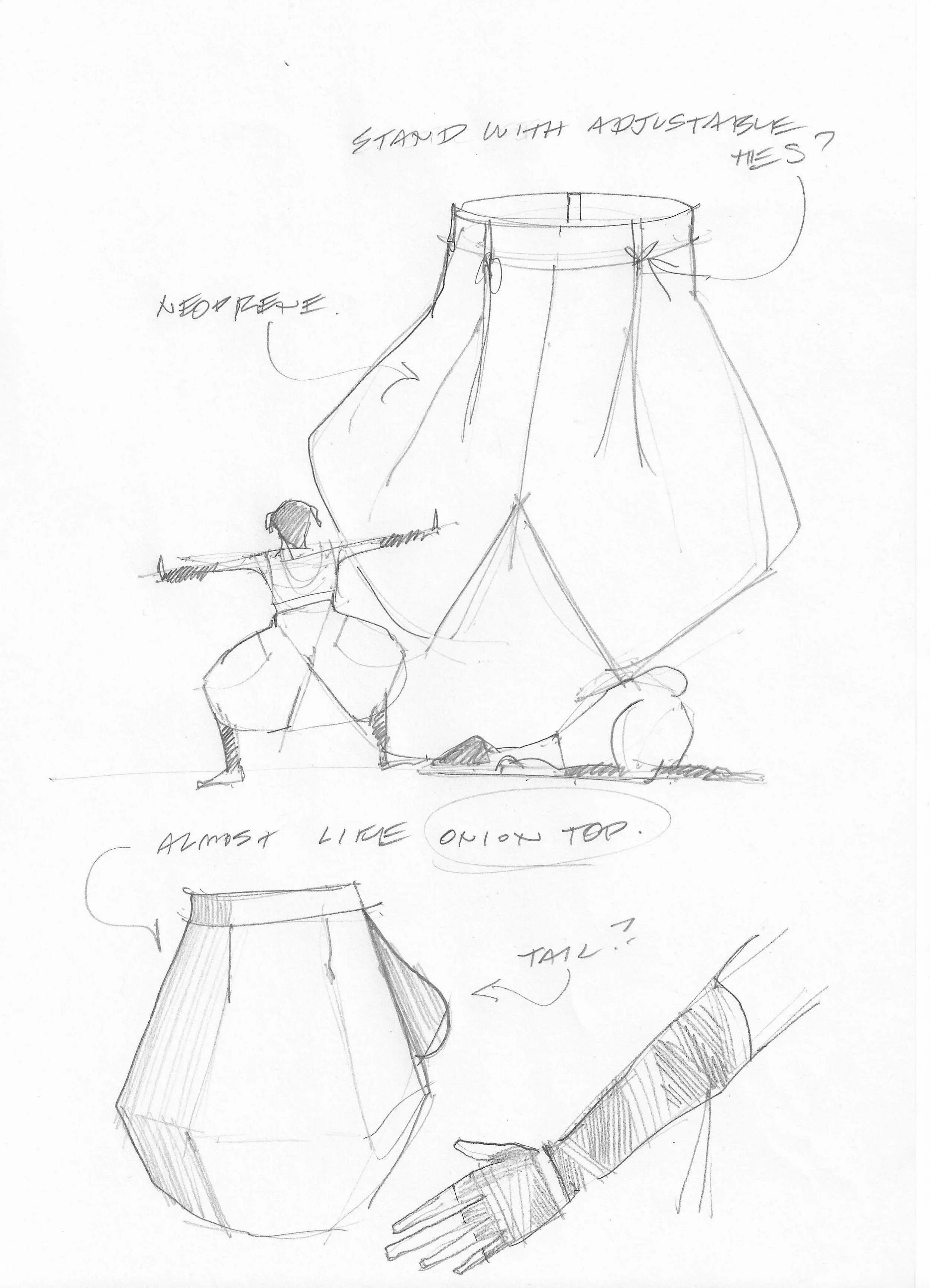
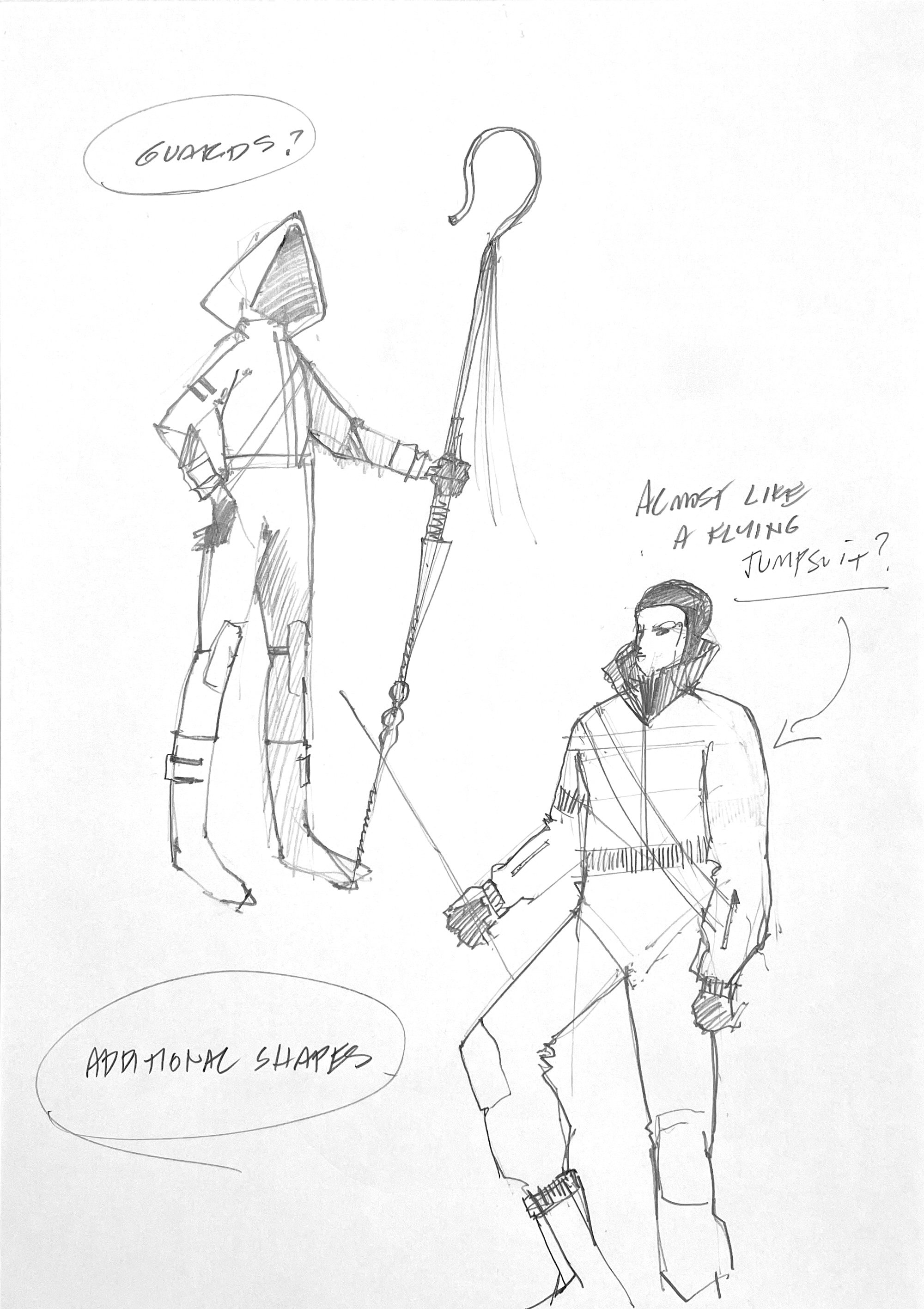
Costume Concepts
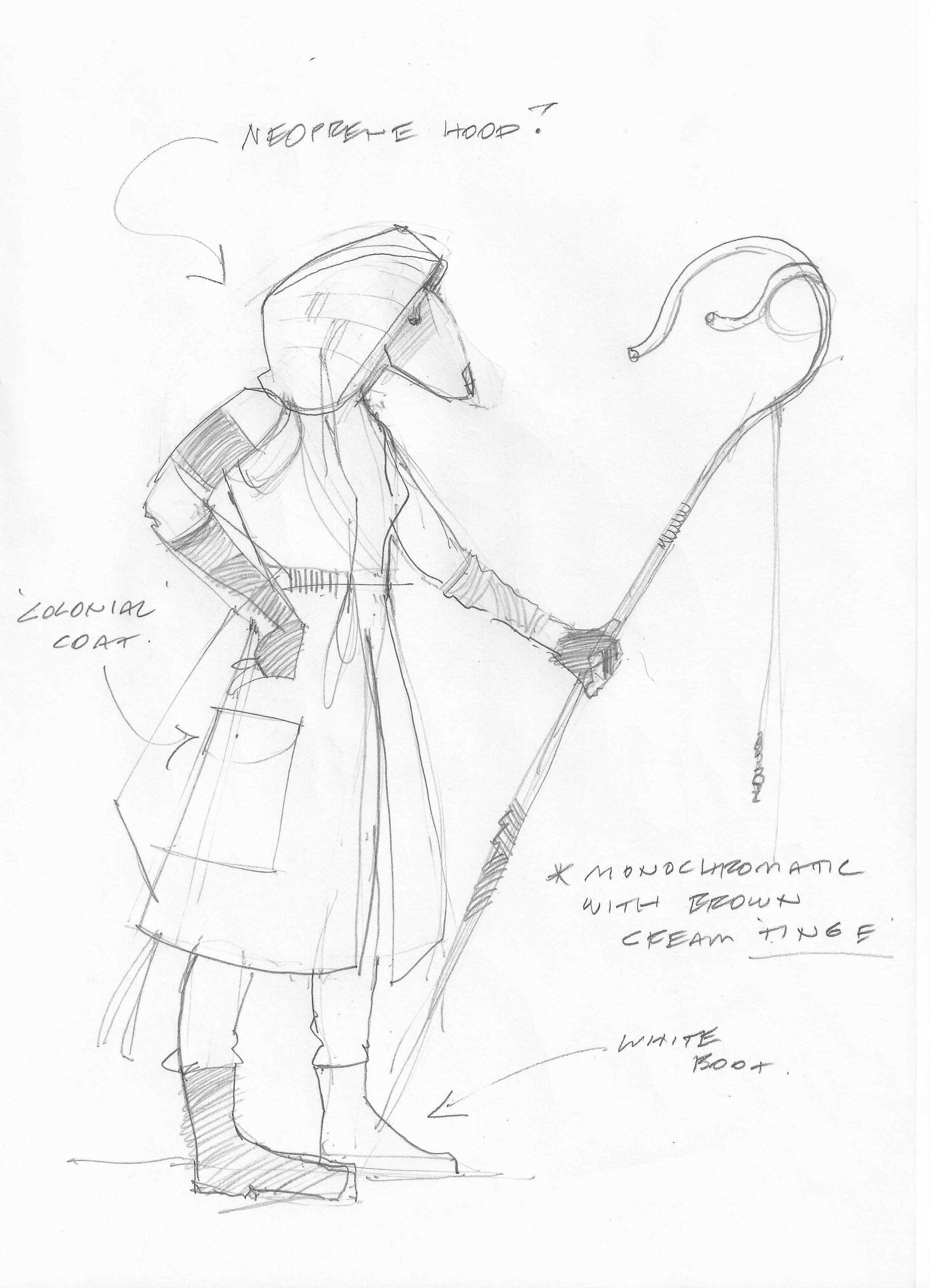
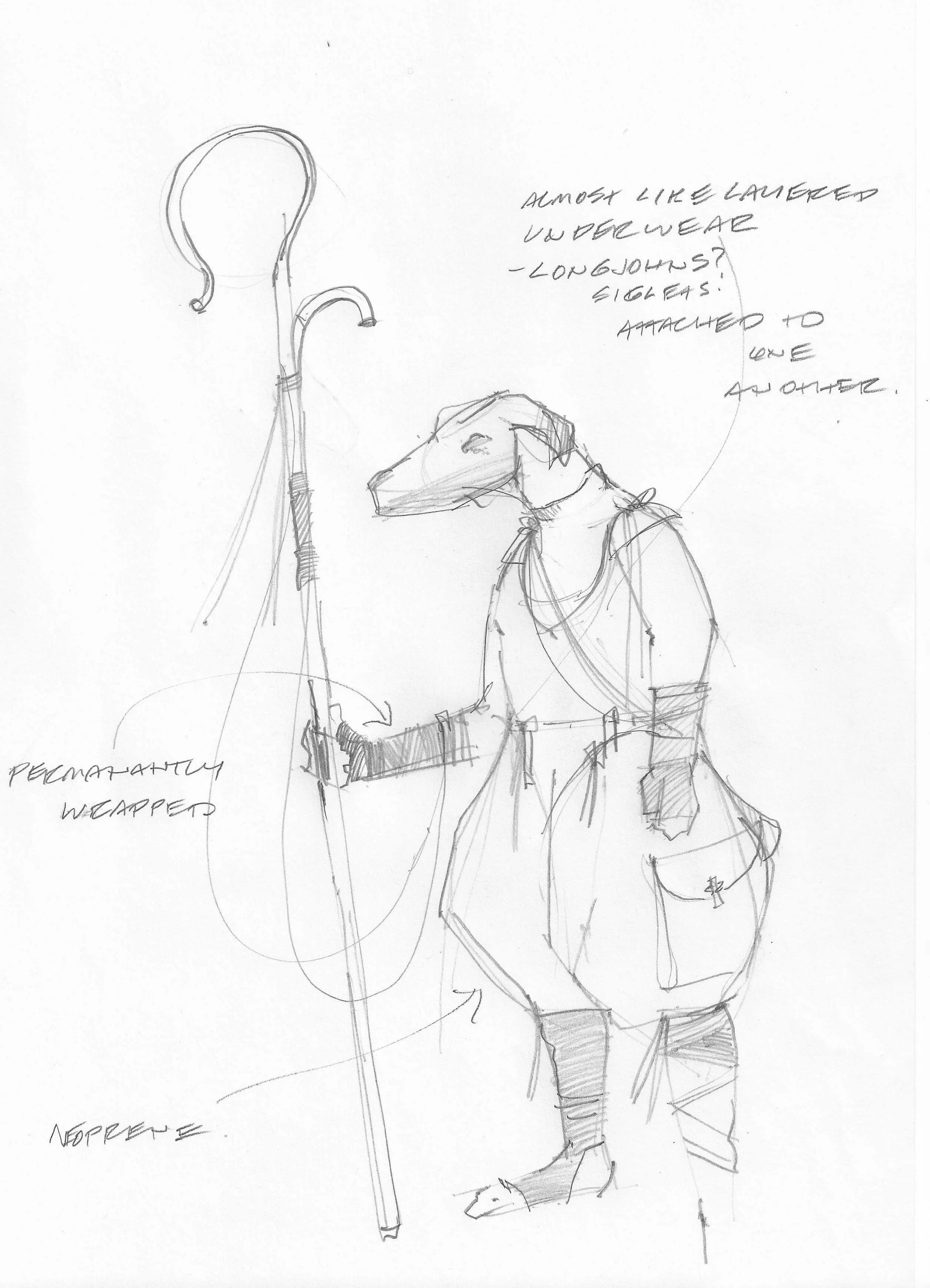
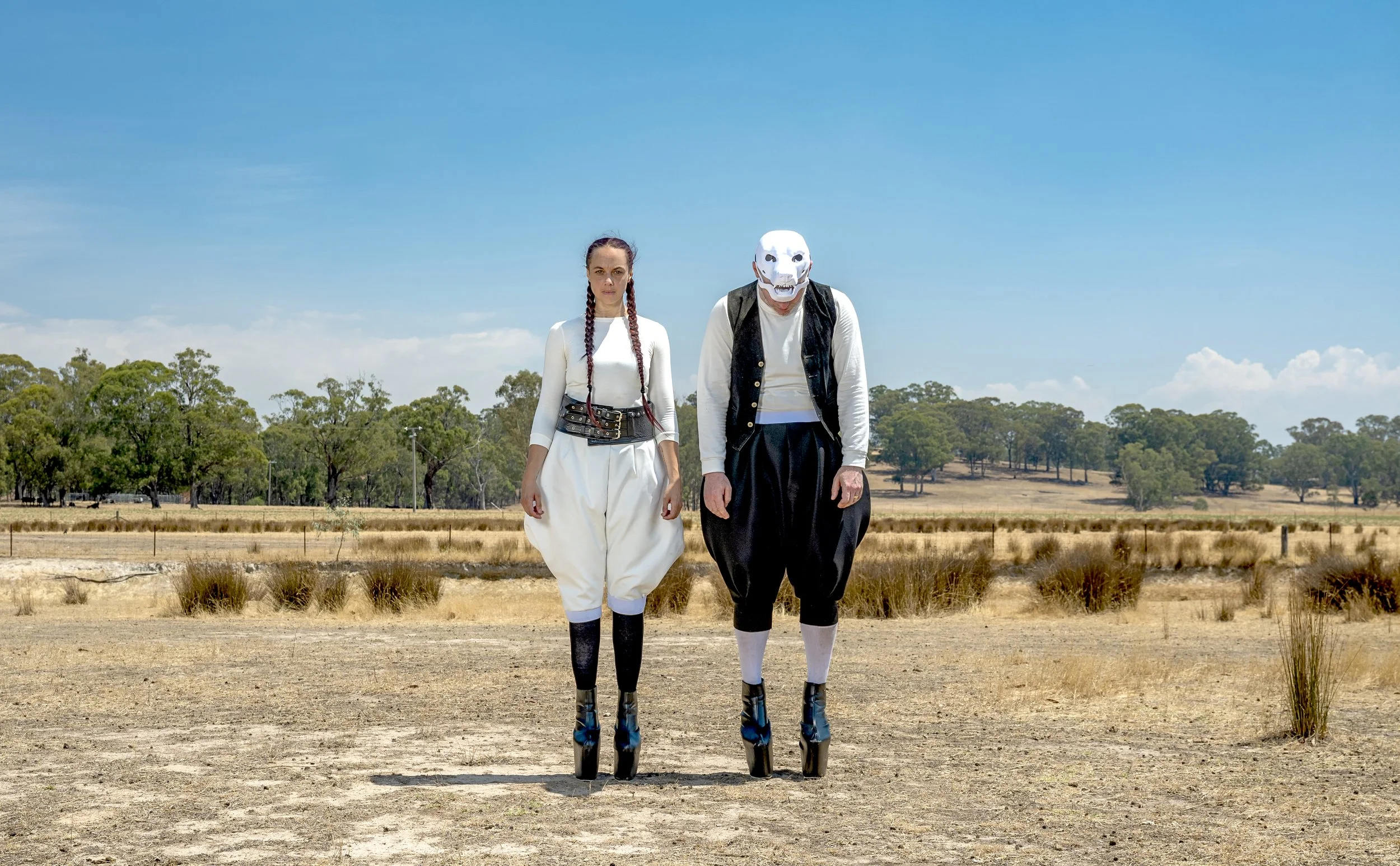
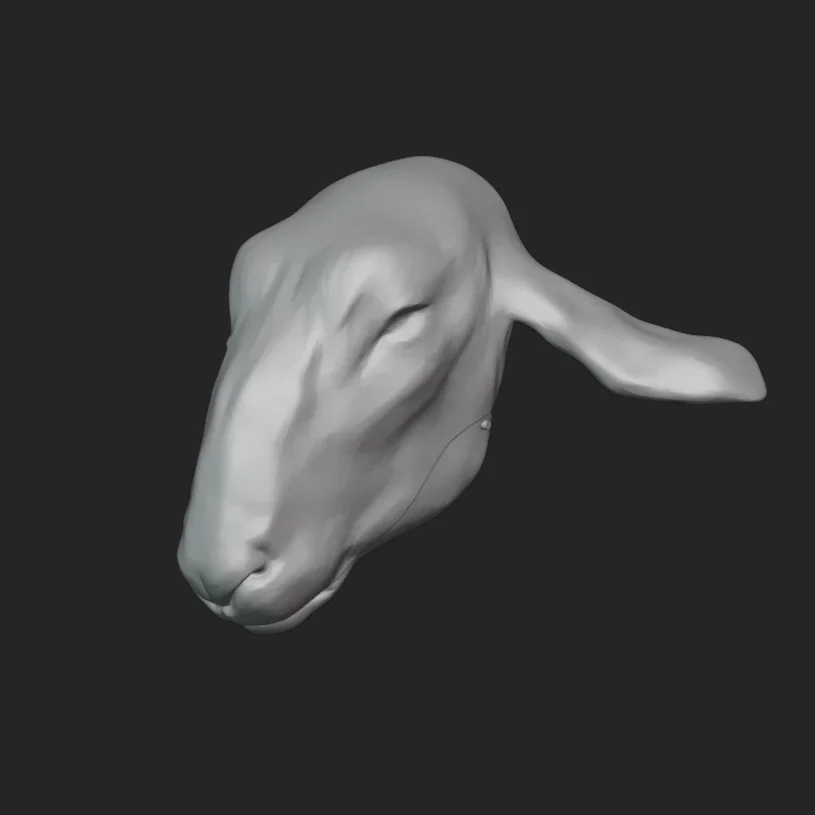
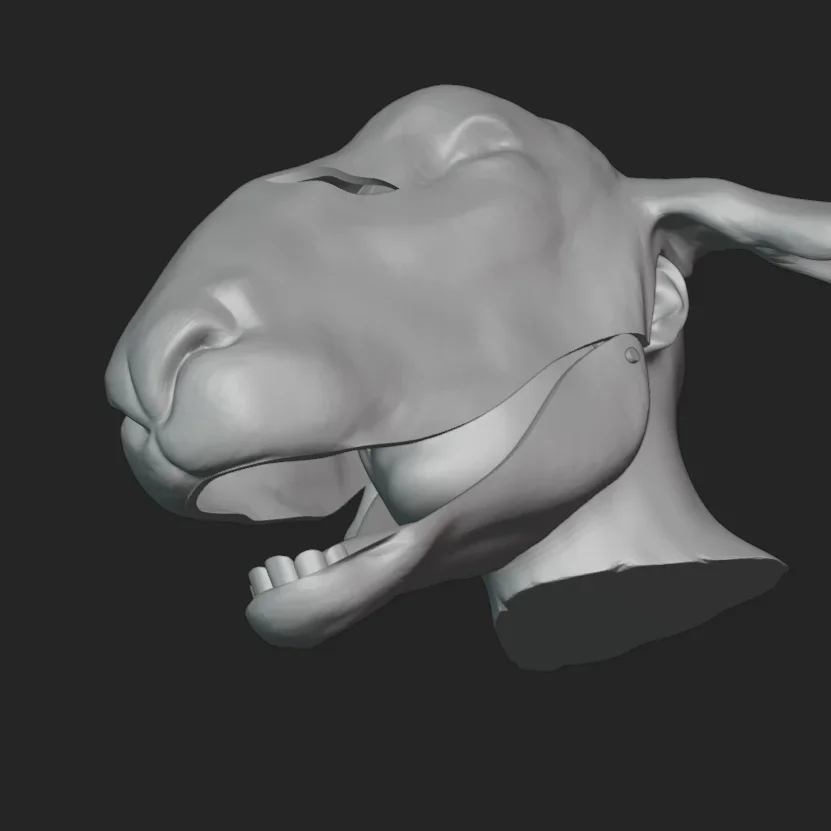
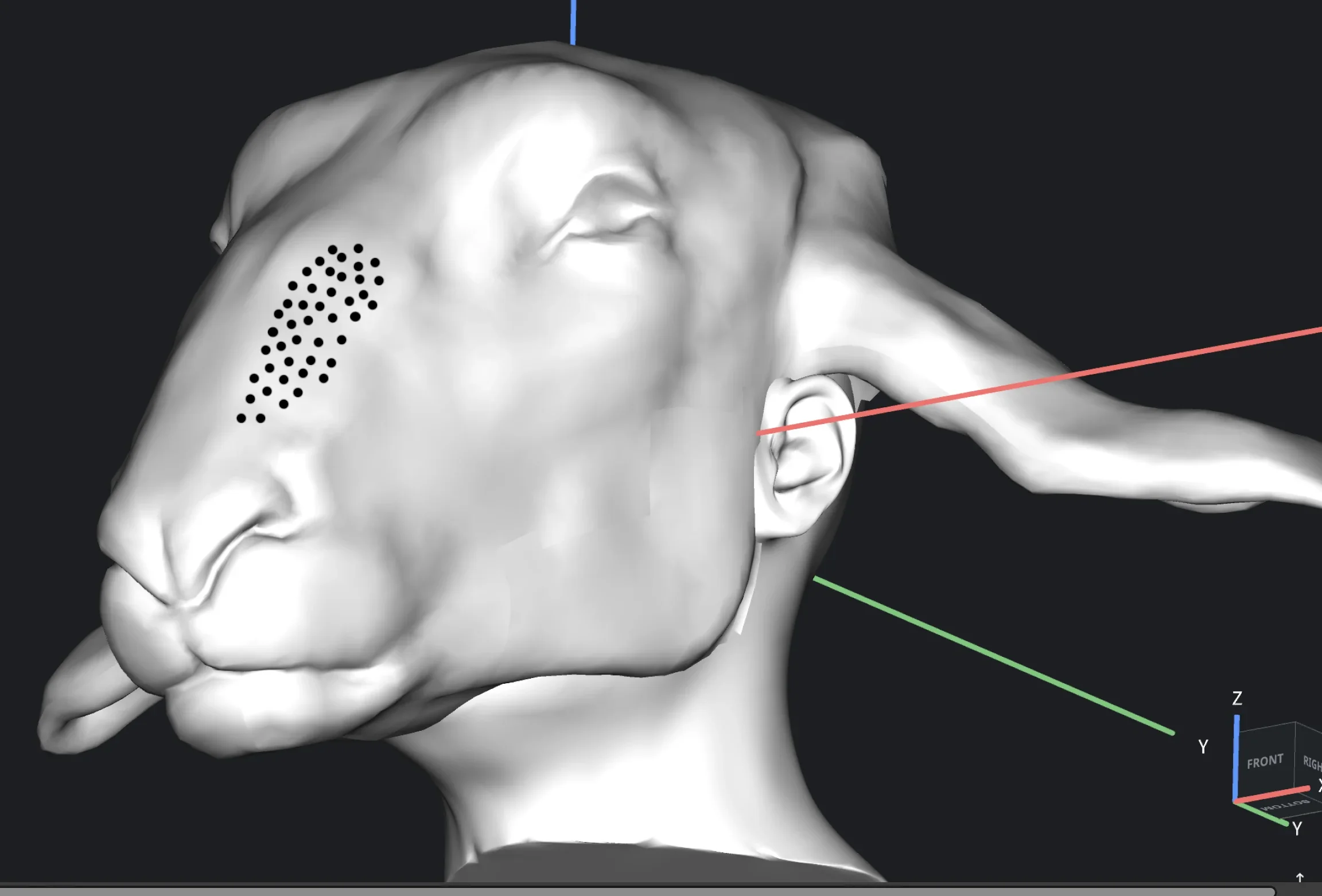
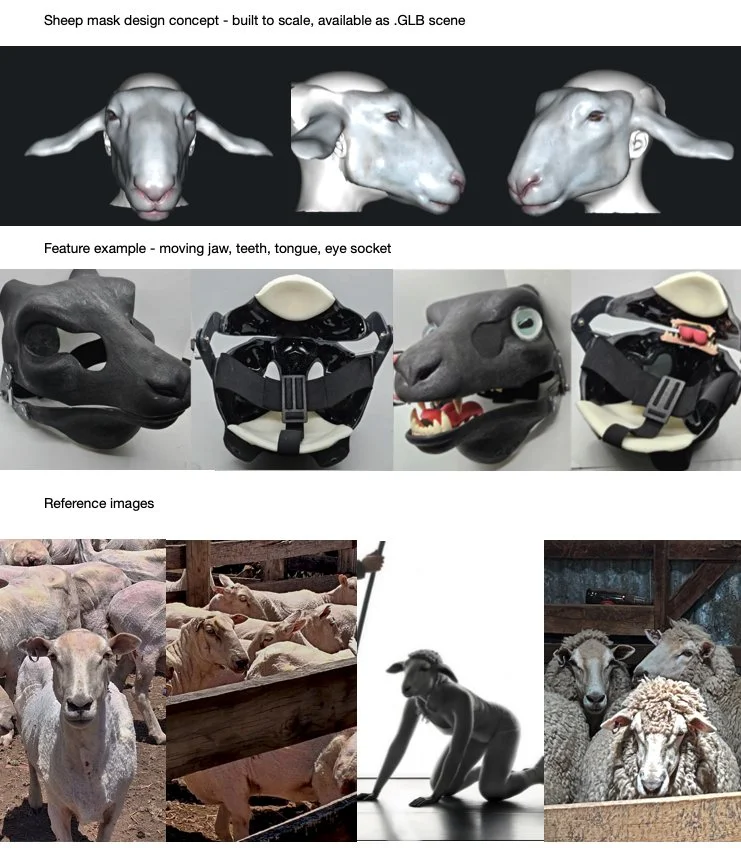
Sheep Mask Development
Visual palette
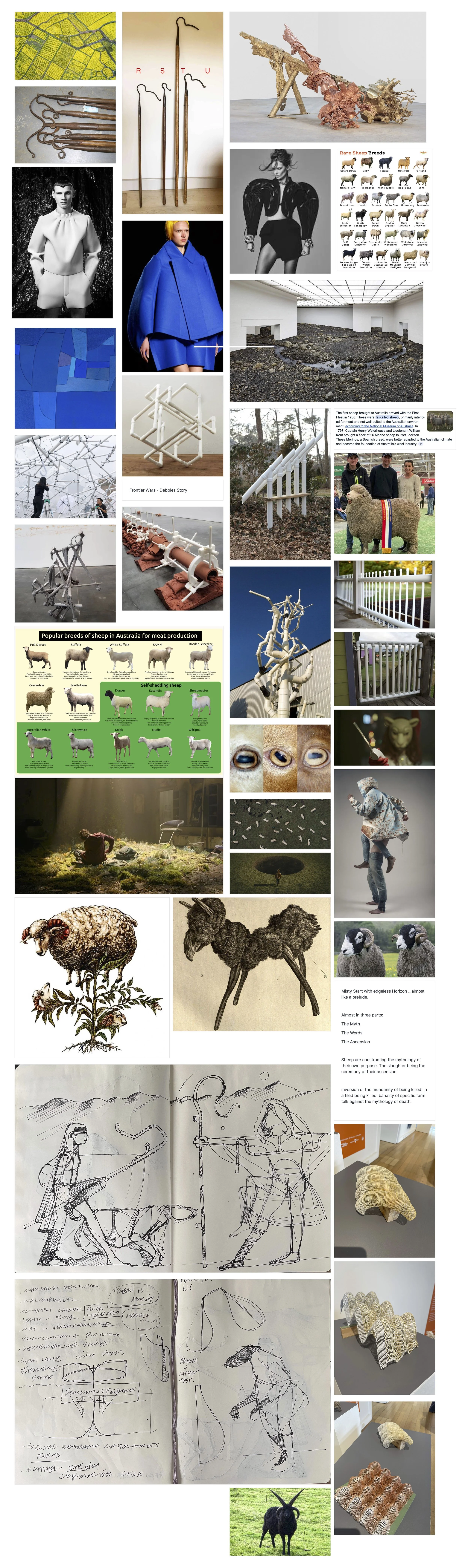
Visual Palette
Core concept (objects + transformation)
A near-empty world that accrues weight: the stage begins sparse; objects and meanings accumulate by ritual, testimony, and handling.
Central object arc: a dragged “land” enters and becomes a hoisted sack—debris and discarded costuming laid onto the land, cinched by a drawstring-like mechanism, lifted into the air as an offering.
Hanging carcasses: two life-like, butchered, headless carcasses lowered into view at the top of Act 1 Scene 4; hyper-real and unmistakably “processed.”
Sound-as-object: crook-shaped flutes played by sheepdog-masked stilt walkers; breath and tone felt as a physical force in the space.
Containment apparatus: harness elements that read as pastoral tools and restraint systems—ambiguous care/management.
Material language
Waste-led build: repurposed garments, rope, wool/fleece, soft fillers, plastic tags, small tools; visible mending and knotting.
PVC as a signature material: heat-shaped to read as bone/horn/pipe (notably in crook-flute forms and structural elements).
White neoprene as a repeating texture: clean-edged panels, trims, straps, pads—clinical clarity against organic matter.
Organic/synthetic clash: wool/rope/breath/water against PVC/neoprene/webbing—tactile friction as a theme.
Colour and finish
Base: black/charcoal floor and masking; haze and backlight to carve silhouettes.
Whites: bright neoprene and pale PVC to “read” under both warm silhouette and cool procedural light.
Carcass tone: flesh/grey-pink/ivory fat notes (as realistic as possible) to puncture the otherwise stylised palette.
Overall: muted multicolour emerging only through accumulated debris—history as sediment.
Form and silhouette
Long lines: crook-flute arcs; stilt-walker height; dragging lines and tensioned cords.
Suspended forms: carcasses; final hoisted sack (land cinched into volume).
Costume silhouettes: believable sheep elements, shepherd workwear with structured trims, and mask language that moves between animal and human function.
Conceal → reveal logic (stage picture over time)
Act 1: sparse world; silhouettes; meaning built through repetition and ritual.
Act 1 Scene 4: the carcasses arrive as a sudden, literal truth inside the abstraction.
Act 3: the land enters; debris is gathered onto it; the final transformation lifts the accumulated remains into view.
Lighting interface (guiding tone)
Act 1: warm backlight silhouettes through haze—mythic, watchful, elemental.
Act 2: cooler, more procedural states—sermon/testimony sharpened, less forgiving.
Act 3: a progression into clearer “gallery” visibility as the world is made—ending with an iconic lift (the hoisted sack) and a communal dance in a clean, held atmosphere.